
Product Category Search
Best christian salvation theory, ranked
-
 Best overall Crossway
Penal Substitutionary Atonement
Central to Protestant theology, it emphasizes Christ taking the penalty for sin, satisfying divine justice and enabling reconciliation.
- Biblically grounded
- Clear legal framework
- Highlights God's love and justice
- Can seem punitive
- Limited focus on transformation
-
 Best for cosmic perspective Wipf & Stock Publishers
Christus Victor
Views salvation as Christ's victory over sin, death, and evil, restoring humanity's freedom and relationship with God.
- Triumphant narrative
- Emphasizes liberation
- Widely ecumenical
- Less precise on legal aspects
- May lack individual application
-
 Best for ethical transformation
Moral Influence Theory
Focuses on Christ's life and death as a moral example that inspires believers to live righteously and love God.
- Encourages imitation of Christ
- Universally accessible
- Focuses on inner change
- Downplays objective atonement
- May not address sin's penalty
-
 Best for theological depth Cornell University Library
Recapitulation Theory
Developed by Irenaeus, it sees Christ as the second Adam who recapitulates human life, undoing Adam's disobedience through perfect obedience.
- Christ-centered view of history
- Connects incarnation and salvation
- Rich theological tradition
- Complex to explain
- Less known in popular circles
-
 Best historical perspective
Ransom Theory
Early church view that Christ's death was a ransom paid to Satan to free humanity from bondage, later refined by Origen and others.
- Powerful imagery of liberation
- Early church roots
- Highlights spiritual warfare
- Seems to imply Satan has rights
- Less systematic
-
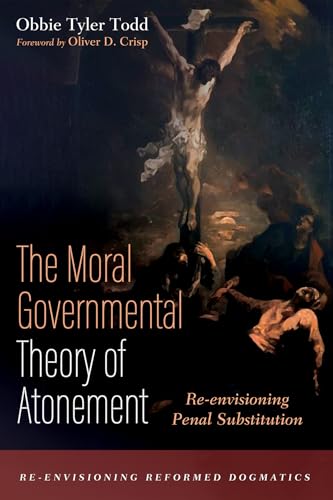 Best for public justice Cascade Books
Governmental Theory
Proposed by Hugo Grotius, it holds that Christ's suffering demonstrates God's justice, allowing forgiveness while upholding moral order.
- Balances justice and mercy
- Satisfies public order
- Influential in Arminianism
- Not as substitutionary
- May be seen as insufficient
-
Best for personal experience
Subjective (Mystical) Theory
Salvation is understood as a transformative union with Christ, where believers participate in his life, death, and resurrection mystically.
- Focuses on personal relationship
- Emphasizes spiritual transformation
- Mystical depth
- Vague on mechanics
- Minimizes objective facts
-
 Best for medieval theology
Satisfaction Theory
Anselm's view that Christ's infinite merit satisfies God's honor offended by sin, creating a robust legal and moral satisfaction.
- Logical and systematic
- Influential in Catholicism
- Respects divine honor
- Honor model may be dated
- Limited emphasis on love
Similar Searches
- christian salvation theory books
- christian prophecies
- childrens christian animal fiction
- christian institutions and organizations books
- christian saints books
- christian bible quotations books
- children and teens christian books
- christian mystery and suspense romance books
- christian counseling
- christian stewardship books
- christian dating and relationships books
- christian prophets books
- childrens christian humor fiction books
- black and african american christian fiction books
- christian monasticism and asceticism books