
Product Category Search
The best organic reagents you can buy
-
Best overall protection reagent
Boc Anhydride (Boc2O)
Widely used for introducing tert-butoxycarbonyl protecting groups to amines and alcohols.
- High purity
- Easy handling
- Good shelf life
- Flammable
-
Best base for coupling reactions
DIPEA (Diisopropylethylamine)
Sterically hindered base that suppresses side reactions in amide coupling.
- Strong base
- Low nucleophilicity
- Odorless
-
Best phosphine reagent
PPh3 (Triphenylphosphine)
Key reagent for Wittig reactions and reduction of phosphonium salts.
- High efficiency
- Stable
- Versatile
- Odorous
-
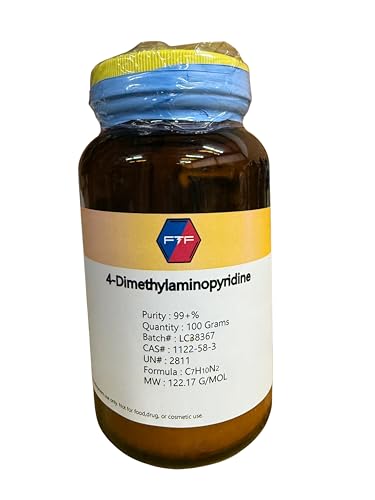 Best acylation catalyst FTF
DMAP (4-Dimethylaminopyridine)
Highly effective nucleophilic acylation catalyst for esterification and acylation.
- Potent catalyst
- Broad applicability
- Low cost
-
Best silylating agent
TMSCl (Trimethylsilyl chloride)
Common reagent for protecting alcohols and activating carbonyl groups.
- Fast reaction
- Stable
- Easy to use
- Moisture sensitive
-
Best sulfonyl chloride
p-TsCl (p-Toluenesulfonyl chloride)
Popular tosylating agent for converting alcohols to tosylates.
- Reactivity
- Good yield
- Easy workup
- Corrosive
-
 Best polar aprotic solvent Carolina Chemical
DMF (Dimethylformamide)
Versatile solvent for SN2, coupling, and many other reactions.
- High polarity
- Low freezing point
- Widely available
- Strong odor
- Toxic
You Might Also Like
- lab pitchers
- lab environmental bottles
- lab bunsen burners
- lab boiling stones
- lab sample injection syringes
- lab tweezers
- water purification system accessories
- lab chromatography paper
- chemical standards
- lab dosing pumps
- lab hot plates
- lab scissors
- lab genomic microplates
- chemical salts
- lab weighing dishes