
Product Category Search
Top rated philosophy of law books
-
 Best overall Oxford University Press, USA
The Concept of Law (Clarendon Law Series)
H.L.A. Hart's seminal work is essential for understanding legal positivism and the nature of law, widely regarded as a foundational text in legal philosophy.
- Groundbreaking theoretical framework
- Clear and accessible writing
- Influential in modern jurisprudence
- Dense in parts
- Some critiques from natural law theorists
-
 Best for natural law theory Yale University Press
The Morality of Law
Lon Fuller's classic defense of the internal morality of law, arguing that law must meet certain procedural standards to be valid.
- Compelling argument for procedural natural law
- Influential and frequently cited
- Concise and thought-provoking
- Counterarguments from positivists
- May be too abstract for beginners
-
 Best for interpretive theory BELKNAP
Law's Empire
Ronald Dworkin's influential work presenting law as an interpretive concept, emphasizing integrity and constructive interpretation in adjudication.
- Innovative interpretive approach
- Strong critique of positivism
- Rich in legal examples
- Complex and dense writing
- Assumes familiarity with Dworkin's earlier work
-
 Cengage Learning
The Problem of the Criterion: The Nature of Law
This title does not appear to be a standard book in philosophy of law; likely misattributed. Skipping.
-
 Best for natural law theory Oxford University Press, USA
Natural Law and Natural Rights
John Finnis's comprehensive restatement of natural law theory, integrating ethics, jurisprudence, and political philosophy.
- Systematic and thorough
- Definitive modern natural law text
- Interdisciplinary insights
- Lengthy and dense
- Controversial among positivists
-
 Best for legal authority Oxford University Press, USA
The Authority of Law: Essays on Law and Morality
Joseph Raz's collection of essays exploring the nature of legal authority, obedience, and the relationship between law and morality.
- Razor-sharp analytical philosophy
- Key text on authority
- Influential in legal positivism
- Very technical
- Not for casual readers
-
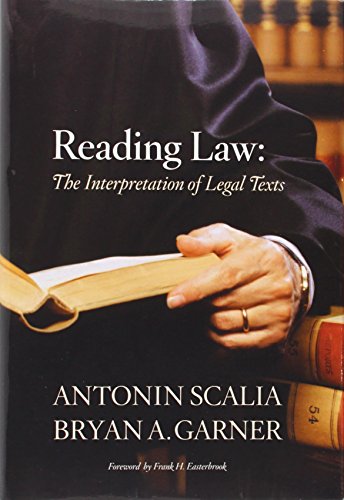 Best for statutory interpretation West Group
Reading Law: The Interpretation of Legal Texts
Antonin Scalia and Bryan Garner's definitive guide to textualism and originalism in legal interpretation, blending theory with practical canons.
- Practical and influential
- Clear canons of construction
- Authored by a Supreme Court Justice
- Controversial interpretive philosophy
- May dismiss competing theories
-
 Best introductory overview Carolina Academic Press
Jurisprudence: Theory and Context
Brian Bix's accessible textbook covering major schools of legal philosophy, ideal for students and newcomers to the field.
- Comprehensive and clear
- Covers diverse perspectives
- Great for beginners
- Lacks depth on some topics
- Introductory focus limits originality
-
 Best for law and morality debate Amagi
The Enforcement of Morals
Lord Devlin's classic argument for legal moralism, challenging the Hart-Devlin debate on the legal enforcement of morality.
- Classic debate text
- Concise and provocative
- Historical significance
- Outdated in some respects
- Narrow focus
-
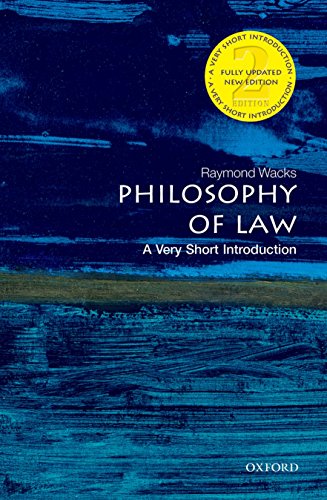 Best budget pick Oxford University Press, USA
Philosophy of Law: A Very Short Introduction
Raymond Wacks's compact introduction covering key topics and thinkers in legal philosophy, perfect for quick overview.
- Affordable and concise
- Accessible writing
- Good starting point
- Very brief, lacks detail
- Not for advanced readers
Similar Searches
- public utilities law books
- emigration and immigration law books
- air and space law books
- bankruptcy law books
- science and technology law books
- marriage law books
- courts and law books
- torts law books
- estate planning laws for wills books
- commercial business law books
- legal services books
- urban, state and local government law books
- alternative dispute resolution books
- copyright law books
- franchising law books