
Product Category Search
The best cross-platform software development you can buy
-
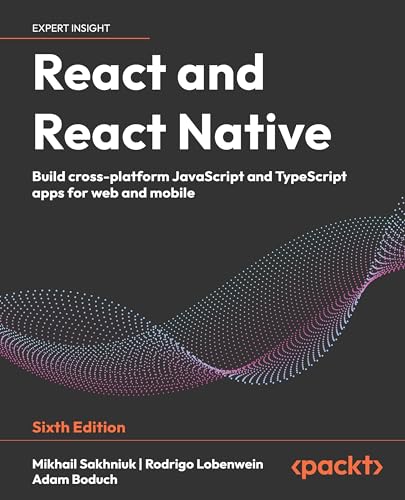 Best overall Packt Publishing
React Native
React Native allows building mobile apps using React and JavaScript, with near-native performance and a large community.
- Large community and ecosystem
- Hot reload for fast development
- Reusable code across platforms
- Performance can lag for complex animations
-
 Best for performance Packt Publishing
Flutter
Flutter uses Dart to create natively compiled apps for mobile, web, and desktop from a single codebase with expressive UI.
- High performance with Dart
- Expressive and customizable UI
- Fast development with hot reload
- Large app size
-
 Best for .NET developers
Xamarin
Xamarin uses C# and .NET to build native apps for Android, iOS, and Windows with shared code logic.
- Strong integration with Microsoft ecosystem
- Native performance
- Shared code across platforms
- Steep learning curve for non-.NET devs
- UI code can be verbose
-
 Best for game development Unity Tactical
Unity
Unity is a cross-platform game engine with rich 2D/3D capabilities and a huge asset store.
- Excellent for 2D/3D games
- Large asset store and community
- Supports many platforms
- Can be overkill for non-game apps
- License costs for commercial use
-
Best for desktop and embedded apps
Qt
Qt is a C++ framework for developing cross-platform applications with a rich set of widgets and tools.
- Native look and feel across platforms
- Comprehensive UI components
- Strong performance
- C++ can have steep learning curve
- Commercial license is expensive
-
 Best for desktop apps using web tech Manning
Electron
Electron combines Chromium and Node.js to build desktop apps with HTML, CSS, and JavaScript.
- Reuse web development skills
- Large library of existing apps
- Fast prototyping
- High memory usage
- Larger app size
-
Best for React Native developers targeting web Packt Publishing
React Native for Web
React Native for Web extends React Native to web platforms with minimal code changes.
- Code sharing between mobile and web
- Leverage existing React knowledge
- Gradual adoption
- Not all native modules work on web
- Smaller community than React Native
-
 Best for simple mobile apps with web skills Addison Wesley
Apache Cordova
Apache Cordova wraps web apps in a native container to access device features via plugins.
- Easy if you know HTML/CSS/JS
- Open source
- Large plugin ecosystem
- Performance is worse than native
- UI may feel non-native
-
 Best for .NET developers building modern apps Apress
.NET MAUI
.NET MAUI is the evolution of Xamarin.Forms, building native apps for mobile and desktop with one project.
- Single project for multiple platforms
- Modern hot reload
- Full access to native APIs
- Relatively new, smaller ecosystem
- Limited third-party controls
-
 Best for rapid prototyping O'Reilly
PhoneGap
PhoneGap (based on Apache Cordova) enables building mobile apps with web technologies and device APIs.
- Quick prototyping
- Simple setup
- Cross-platform from one codebase
- Performance issues on complex apps
- Limited native functionality via plugins
You Might Also Like
- cross-platform software development books
- software development books
- software development
- childrens computer software books
- restaurant management software
- project management software books
- software testing
- voice recognition software
- business software guides books
- business software guides
- software utilities books
- teen and young adult computer software books
- directx software programming
- opengl software programming books
- software design tools