
Product Category Search
The best economic history books you can buy
-
 Best Overall Currency
Why Nations Fail: The Origins of Power, Prosperity, and Poverty
An incredibly influential work that argues institutions, rather than geography or culture, are the primary drivers of long-term economic success and national prosperity.
- Highly engaging narrative style
- Backed by centuries of historical evidence
- Clear distinction between inclusive and extractive institutions
- Can feel somewhat repetitive in later chapters
- Slightly oversimplifies complex historical events
-
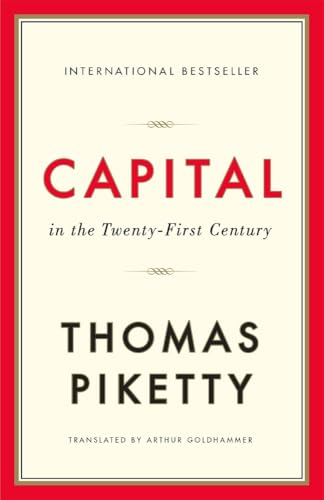 Best for Understanding Inequality Harvard University Press
Capital in the Twenty-First Century by Thomas Piketty
A monumental study of wealth and income inequality across Europe and the United States since the eighteenth century, supported by extensive empirical data.
- Unprecedented depth of historical data
- Reshaped modern economic debate on wealth distribution
- Very dense and academically challenging
- Proposed solutions are highly controversial
-
 Best for Financial History Random House Books for Young Readers
The Ascent of Money: A Financial History of the World
Traces the evolution of the global financial system, showing how finance and credit have been essential drivers of human progress from ancient times to the modern era.
- Engaging and accessible to general readers
- Excellent explanation of complex financial instruments
- May gloss over some systemic flaws of finance
- Author's viewpoints can be polarizing
-
 Best Alternative Perspective Melville House
Debt: The First 5,000 Years
An anthropological exploration of economic history that challenges the standard barter-to-money economic myth, demonstrating that debt existed long before coinage.
- Fascinating anthropological perspective
- Deeply challenges traditional economic dogmas
- Quite long and winding in its arguments
- Strong ideological bias that may alienate some readers
-
 Best Classic Critique Beacon Press
The Great Transformation by Karl Polanyi
A classic 1944 work that analyzes the social and political changes brought about by the rise of the market economy, arguing that self-regulating markets are socially destructive.
- Deeply influential critique of market liberalism
- Highly relevant to modern debates on globalization
- Difficult academic prose style
- Some historical details are heavily debated by modern economists
-
 Best Introductory Book Touchstone
The Worldly Philosophers: The Lives, Times, and Ideas of the Great Economic Thinkers
A brilliantly written history of economic thought that profiles the lives and ideas of major economists like Adam Smith, Karl Marx, and John Maynard Keynes.
- Extremely accessible and entertaining
- Excellent introduction to the history of economic theory
- Focuses on biographical details over deep technical analysis
- Slightly dated as it was first published in 1953
You Might Also Like
- vocational guidance books
- investment portfolio management books
- secretarial aids and training books
- financial auditing books
- budgeting and money management books
- restaurant and food industry books
- banks and banking books
- financial interest books
- multilevel marketing books
- technical project management books
- human resources and personnel management books
- customer relations books
- international taxes books
- park and recreation industry books
- business decision making books