
Product Category Search
The best income inequality books you can buy
-
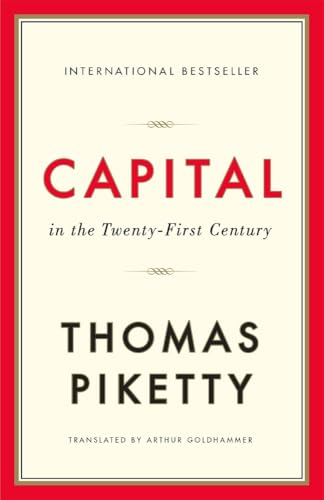 Best overall Harvard University Press
Capital in the Twenty-First Century
Thomas Piketty's seminal work on wealth inequality, combining historical data with economic analysis to explain the dynamics of capital accumulation.
- Comprehensive historical data
- Influential policy insights
- Accessible for non-economists
- Dense reading
- Controversial methodology
-
 Best for policy context W. W. Norton & Company
The Price of Inequality: How Today's Divided Society Endangers Our Future
Nobel laureate Joseph Stiglitz argues that inequality hampers economic growth and democracy, proposing concrete solutions.
- Clear policy proposals
- Strong ethical framework
- Well-researched
- Political bias perceived
- Limited global perspective
-
 Best collection of essays W. W. Norton & Company
The Great Divide: Unequal Societies and What We Can Do About Them
Joseph Stiglitz's compilation of essays covering various aspects of inequality in the US and globally, with a focus on solutions.
- Wide-ranging topics
- Concise chapters
- Actionable ideas
- Repetitive themes
- Not deeply technical
-
 Best for practical solutions Harvard University Press
Inequality: What Can Be Done?
Anthony Atkinson presents a comprehensive set of policy proposals to reduce inequality, grounded in economic theory.
- Detailed policy proposals
- Clear economic rationale
- Balanced approach
- Focuses on UK/Europe
- Optimistic assumptions
-
Best budget pick
The Winner-Take-All Economy: How the Rich Get Richer and the Rest Get Left Behind
Explains how market forces concentrate rewards among top performers, leading to inequality, with engaging examples from sports and business.
- Engaging anecdotes
- Insightful market analysis
- Short and readable
- Dated examples
- Lacks recent data
-
 Best for beginners Harvard University Press
The Economics of Inequality
Piketty's shorter and more accessible introduction to inequality, covering historical trends and policy implications.
- Concise overview
- Clear charts
- Beginner-friendly
- Less depth
- Overly simplified
-
 Best for global perspective Currency
Why Nations Fail: The Origins of Power, Prosperity, and Poverty
Daron Acemoglu and James Robinson argue that political and economic institutions are the root cause of inequality between nations.
- Broad historical scope
- Strong institutional focus
- Engaging case studies
- Not solely income inequality
- Deterministic view
-
 Best companion guide Verso
Piketty's Capital in the Twenty-First Century: An Introduction
A concise introduction to Piketty's key ideas, summarizing his data and arguments for readers seeking a quick grasp.
- Summarizes key points
- Easy to read
- Good for review
- Not original
- Lacks depth
You Might Also Like
- economic policy and development books
- corporate taxes books
- knowledge capital books
- total quality management books
- telemarketing books
- economic history books
- workplace culture books
- government management books
- commerce books
- college and education costs books
- real estate investments books
- organizational change books
- theory of economics books
- business mathematics books
- exports and imports economics books